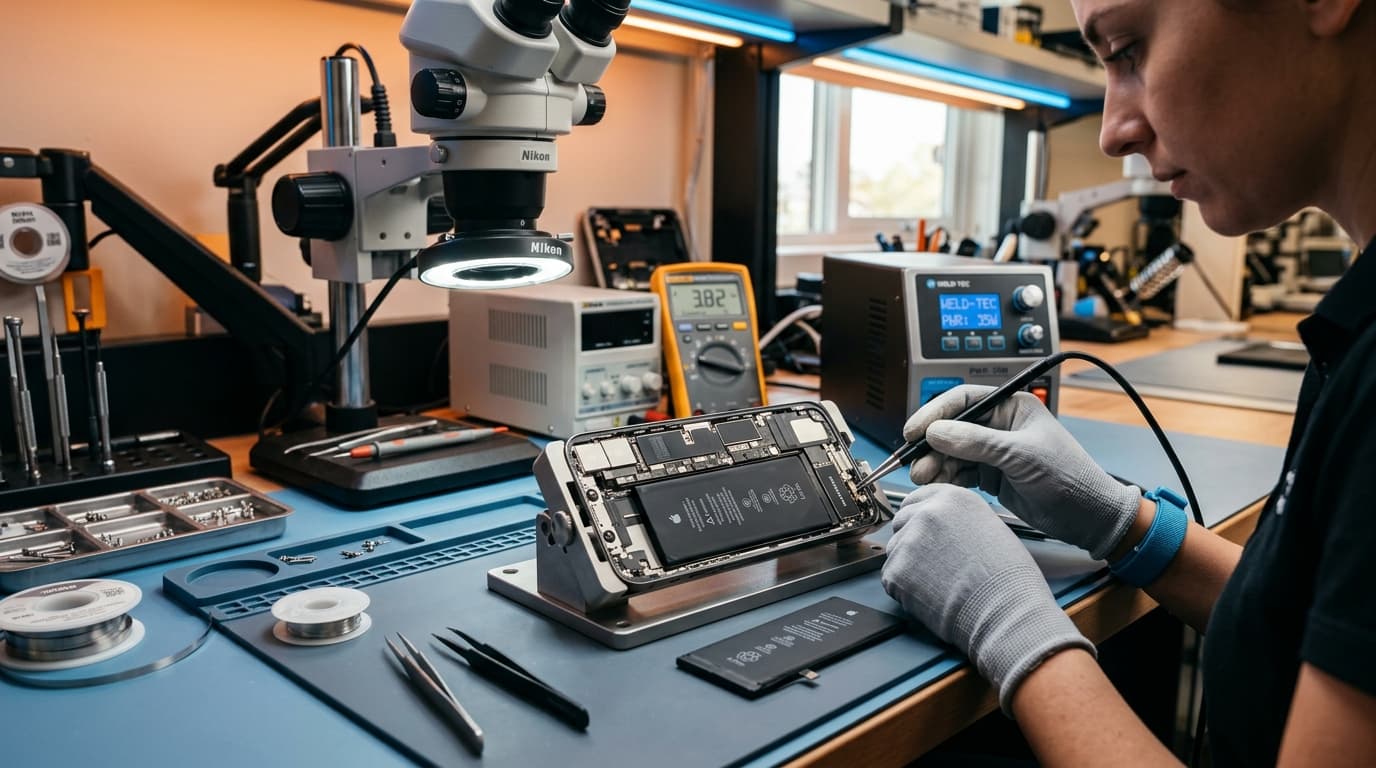
MacBook Logic Board Repair 2026: Diagnosing Dead MacBooks and Micro-Soldering in Bangalore
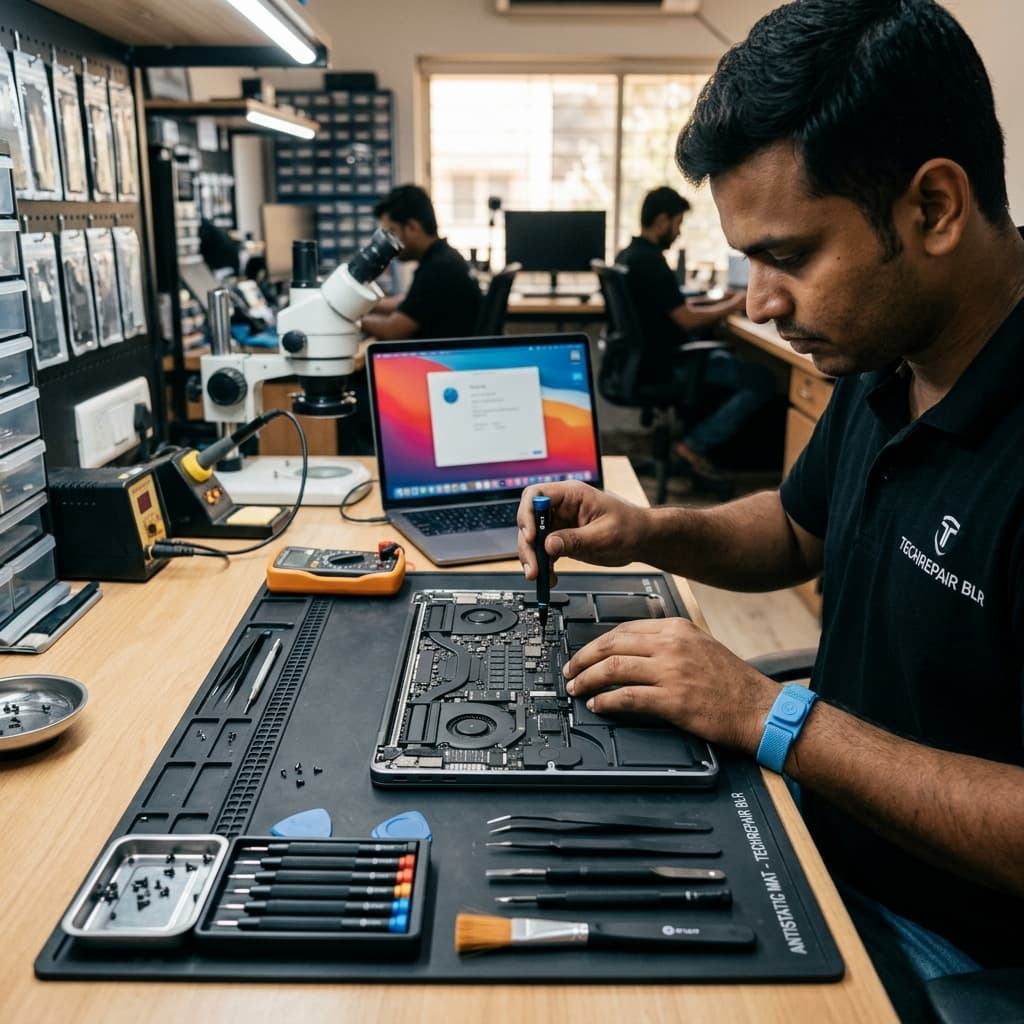
Is your MacBook not turning on? Learn about M-series logic board failures, the dangers of liquid damage, and how component-level micro-soldering repairs in Bangalore can save your data and thousands of rupees.
Introduction: The Reality of Modern MacBook Repairs
In 2026, Apple's M-series MacBooks (M2, M3, and M4) are marvels of engineering, combining CPU, GPU, and RAM into a single unified architecture. While this brings incredible performance and battery life, it also means that a failure in a minor component on the logic board can render the entire machine completely dead. When faced with a MacBook that won't turn on, many users are told by authorized service providers that the entire logic board needs replacement—often costing a substantial sum comparable to buying a new device and resulting in total data loss.
However, at iOne Care Technology in Bangalore, we specialize in component-level logic board repair. By diagnosing the specific microscopic chip or capacitor that failed, we can revive dead MacBooks for a fraction of the cost, while keeping your precious data intact. This guide explains common logic board failures, the dangers of liquid damage, and the micro-soldering process.
1. Common Causes of Logic Board Failure in 2026
Logic board failures rarely happen without a trigger. Here are the top three reasons we see M-series MacBooks fail in our lab:
- Liquid Damage & Corrosion: The undisputed number one killer of MacBooks. Even a small splash of water or coffee can slip through the keyboard or ventilation grilles. When liquid meets the live electrical circuits, it causes immediate short circuits. Over the following days, the liquid reacts with the electricity and copper traces, creating conductive corrosion that destroys vital components.
- Power Surges & Faulty Chargers: Using uncertified third-party chargers or cheap USB-C hubs can send unregulated voltage spikes directly into the MacBook's power delivery chips (CD3217 controllers). Once these chips short out, the Mac will refuse to charge or turn on.
- Thermal Stress & Age: While M-series chips are efficient, Bangalore's ambient heat combined with heavy workloads (video editing, 3D rendering) can cause thermal cycling. Over years, this microscopic expansion and contraction can fracture the delicate solder joints beneath the memory or CPU.
2. The "Dead MacBook" Symptoms
If your MacBook exhibits any of these symptoms, it likely requires logic board repair:
- No Power, No Signs of Life: The screen stays black, the trackpad doesn't click (force touch is disabled), and there is no boot chime.
- Not Charging (Stuck at 5V): When connected to a USB-C ammeter, the MacBook draws only 5V and a few milliamps, instead of negotiating the 20V required for fast charging. This indicates a failure in the USB-C power delivery circuit.
- Boot Looping or Kernel Panics: The MacBook starts to boot, shows the Apple logo, and suddenly restarts. This often points to a failure in the NAND storage chips or RAM.
3. Component-Level Repair vs. Full Board Replacement
Understanding the difference between these two approaches can save you from replacing your entire laptop.
Full Board Replacement (The Authorized Route)
Authorized providers do not perform micro-soldering. If a single microscopic capacitor fails, they replace the entire logic board. Furthermore, because the SSD (NAND chips) is permanently soldered to the M-series logic board, a replacement board means all your data is permanently lost.
Component-Level Micro-Soldering (The iOne Care Approach)
We fix the actual problem. Using schematics, boardview software, and thermal imaging cameras, our senior technicians trace the electrical short to the exact faulty component. We then use high-powered microscopes and micro-soldering stations to remove and replace only the dead chip. The result? Your MacBook turns back on with all your original data exactly where you left it, at a fraction of the cost of a full replacement.
4. The Micro-Soldering Process in Our Lab
When a dead MacBook enters our Bangalore facility, it undergoes a rigorous scientific process:
- Thermal Imaging Diagnosis: We inject a safe, low voltage into the main power rail. The short-circuited component will draw excessive current and heat up rapidly, glowing bright white on our thermal camera.
- Ultrasonic Cleaning (For Liquid Damage): If corrosion is present, the logic board is submerged in an ultrasonic cleaner with specialized chemical solvents to blast away rust and conductive deposits from underneath microchips.
- Micro-Soldering & Reballing: Using hot air rework stations and microscopes, we extract the faulty IC (Integrated Circuit) and solder a brand new replacement.
- Stress Testing: Once revived, the MacBook undergoes 24 hours of rigorous CPU and GPU stress testing to ensure complete stability before being returned.
Why Choose iOne Care Technology for Logic Board Repairs
Logic board repair requires immense precision, specialized equipment, and years of experience. At iOne Care Technology, we offer:
- No Fix, No Fee Policy: If we cannot fix your logic board, you do not pay for the repair attempt.
- Data Recovery Priority: Our primary goal is reviving your original board to save your encrypted data.
- Expertise with M-Series Chips: We have successfully repaired hundreds of M1, M2, and M3 MacBooks across Bangalore.
- Handover Testing Verification: All micro-soldering repairs undergo multi-point thermal and power diagnostic testing before customer handover.
If you've been told your MacBook is unrepairable or the replacement cost is too high, don't give up. Bring it to iOne Care Technology for a free diagnostic assessment and let our experts breathe new life into your device.
Need Professional Repair?
If you're experiencing device issues, our certified technicians are here to help. Get fast, reliable repairs with genuine parts and thorough quality testing.